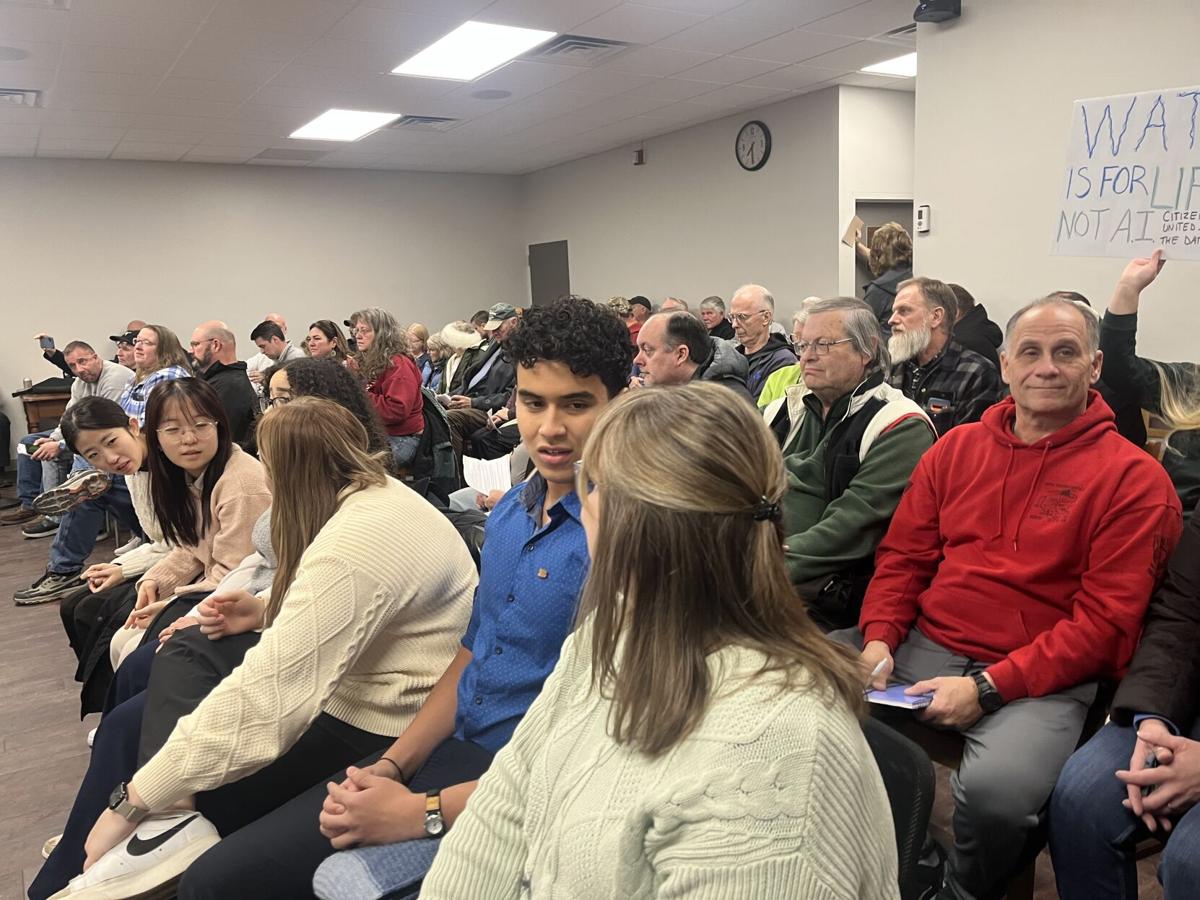
The company proposing a second data center for Beaver Dam detailed the plan at Monday's Common Council meeting, with more than 100 people in attendance and a dozen voicing concerns about the project.
Beaver Dam's first data center is already well underway. Meta Platforms — which owns Facebook and Instagram, among other social media and messaging platforms – is building a $1 billion, 700,000-square-foot facility on 830 acres north of Beaver Dam, between Highway A and Hemlock Road.
Trent Campbell, the Beaver Dam Area Development Corporation executive director, and representatives from Alliant Energy and Oppidan, the company planning the data center, outlined the proposal for the Council.
Who's proposing the data center?
Oppidan Investment Company is a real estate firm out of Minnesota that has been developing data centers since 2016.
People are also reading…
“Oppidan is a Minnesota-based entity with an extensive background in the development of edge data centers,” Campbell said.
Oppidan Investment Company is family owned and operated out of Excelsior, Minn, said Pete Carbonneau, an associate developer for Oppidan.
What's being proposed?
Oppidan is proposing a 90,000-square-foot data center on a 13-acre site on the corner of 151 and Hemlock Road, which is city property.
Plans call for Oppidan to buy the city land. “With this potential project, if it moves forward, Oppidan would be the owner and landlord of the facility,” Carbonneau said.
Campbell said it would be an edge data center, meaning it's closer to end users or devices. “Edge data centers are far smaller in size and scope than hyper scale centers, such as the one to the north of this proposed project.”
“I like to think of them as a kind of a signal booster where they come with storage and compute that keep latency very low, so when you send things across the Internet, it doesn’t get bogged down,” Carbonneau said.
The facility would be different than the Meta facility, Carbonneau said, with a different cooling system that uses water evaporation to reduce temperatures.
It's estimated to use 5,929 gallons of water each day, which Campbell said is less than a typical full-service restaurant.
The developer would be responsible for storm water management, and the buildings would look like other buildings in the area.
What is Beaver Dam's role in the project?
Oppidan plans to buy part of the 34 acres Beaver Dam owns in the Beaver Dam Commerce Park, at $31,000 per acre, which is about the asking price, Campbell said.
It would not seek Tax Increment Financing.
The project would guarantee a minimum tax value of more than $40 million, Campbell said. When the facility is fully operating, it should require less than 20 megawatts of power. Meta's data center needs 400 megawatts.
Fifteen full-time employees will be needed when the facility is finished, Carbonneau said.
Alliant Energy would be required to serve all the customers with additional reserve energy, said Kimberly Mueller, a key account manager for Alliant Energy.
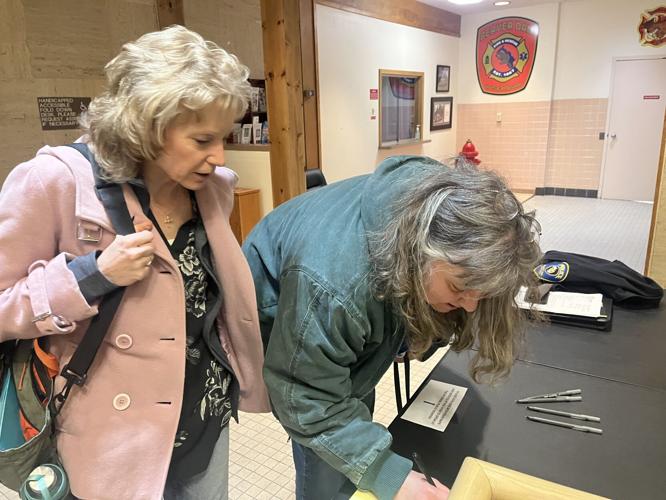
Jode Siedschlag, left, watches as Dawn Czajkowski signs up to join the people speaking during the Beaver Dam Common Council meeting prior to a presentation about the Oppidan data center that is being proposed for the city. Czajkowski spoke about concerns about her son who bought a house nearby.

What was the public's initial response?
Among the 12 people speaking against the center at the Council meeting was a former alder for the city of Beaver Dam.
Mark Nehring was on the Common Council in the early 2000s. Nehring said he has researched the subject of data centers and saw the projects being stopped in other states.
“We have one now, and I figure that is enough,” Nehring said. “I was hoping you would use that land out there for a place that would employ more than 15 people. I sat in your position before. I had been an alderman here many, many years ago. I know you have a tough decision to make, but I hope you listen to these people and make the right one.”
Catherine McFarland lives a few miles away from where the Meta Data Center is being built and questioned if the proposals were being looked at clearly.
“The promised economic benefits often fall short of expectations,” McFarland said. “Although some politicians may point to increased property tax revenue, in reality most states offer such generous tax abatements to attract these data centers that local revenue generation remains on the already overburdened homeowner.”
Stephanie Wiedenhoeft asked the Council to end its contract with the Beaver Dam Economic Development Corporation, "who so brazenly brought in a data center that these people do not want."
“And now they have the audacity to say, 'Oh sure, let’s bring a second one in,'” she said.
Dawn Czajkowski said her son recently purchased a house near the proposed data center. She questioned he'd be able to stay there and whether he'd be able to sell his house after the data centers are built there.
“I understand our mayor and Council have many experts that they have consulted in order to bring these data centers here,” Czajkowski said. “I don’t agree with either of them. I also understand that many Wisconsin cities and towns with their own experts have fought and successfully rejected them.”
“What if the water becomes polluted?” she asked. “What if the electrical bills raise? Maybe double? What if our property values go down due to these data centers?”
What happens next?
Monday's presentation was simply a presentation — there was no mention from the Council about when it might vote on selling property to Oppidan or any other next steps.
Mueller said Alliant Energy will complete an engineering review and provide estimated in-service dates and costs for potential customers.