






If a series of public involvement meetings are any indication, the School District of Wisconsin Dells may have some extra money to operate with over the next four years.
The schools would have this extra cash without it costing area taxpayers an extra dime for the time-being and likely would have a negligible impact during its lifespan. If the referendum passes, the district’s tax levy would remain roughly $140,000 lower than it was for 2021-22.
On the upcoming fall election (Nov. 8) ballot, the district has proposed an operational referendum of $1.2 million recurring over the next four years, with a total addition of $4.8 million during that span.
Due to potential increases in area property values, an increase in state aid, and lingering federal funds through the 2023-24 school year, a passed referendum would not raise the current mill rate (amount of tax payable per $100,000 of property value) for district residents and projects to continue that through its lifespan, which would end in the 2025-26 school year.
People are also reading…
The mill rate for the district is $6.77 for the 2022-23 school year, which constitutes a $0.99 drop from last year.
“The additional $1.2 million would backfill the loss of the ESSER (Elementary and Secondary School Emergency Relief) funds (after the 2023-24 school year),” said Slack. “We’ve used a pretty conservative figure moving forward those next three years in terms of equalized valuations. If property values continue to increase, you’d probably see those (mill rate) numbers decrease.”
Slack added that the school district has worked with the state’s Department of Public Instruction as well as Robert W. Baird, a Milwaukee-based investment firm, to determine tax estimates for the district with a passed referendum.
District administrator Terry Slack said that one of the key factors for the referendum is the district’s status of being locked into a low revenue limit by the state despite enrollment slightly increasing over the past decade.
The upcoming referendum is the district’s first operating referendum in 15 years. Slack attributed the gap in time to support from the community, which included the landslide passage of a $34 million referendum in 2018 to fund the new Wisconsin Dells High School and the upcoming auditorium being built on donated funds.
The School District of Wisconsin Dells is one of 92 school districts in the state putting a referendum on the Nov. 8 ballot.
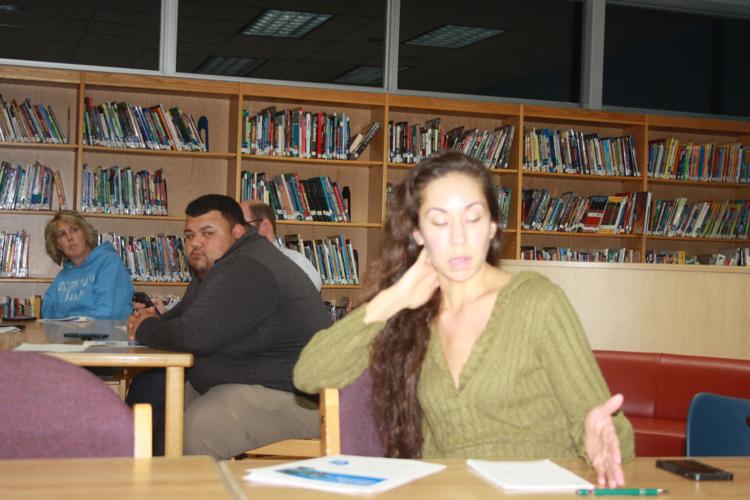
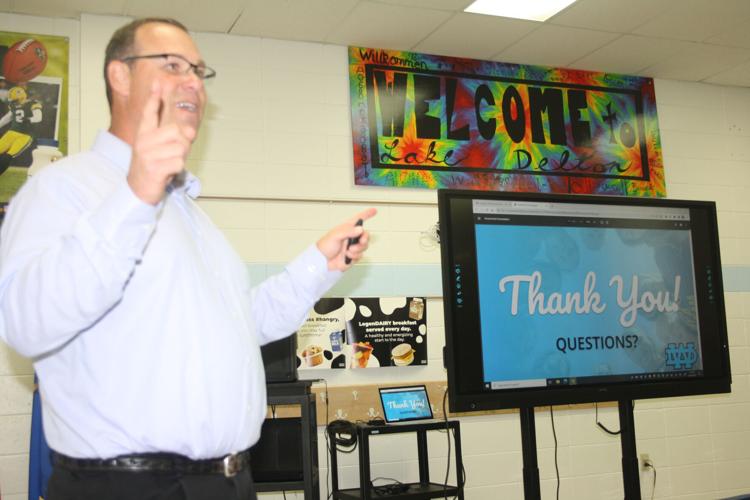
The district held its first public involvement meeting at Lake Delton Elementary School on Oct. 19. Area residents and district teachers such as Darren Jorgenson and Sherry Moyer voiced their opinions regarding the upcoming measure.
Moyer expressed her hopes for the referendum’s passage and asked about potential cuts if the referendum is voted down, in which Slack responded that potential extracurricular programs, along with a bus route, would likely be cut, as well as some academic programs.
“Our goal would be to have as little impact on academics, but things like elective programming would be something we would have to look at,” said Slack.
Jorgenson asked if all programs in the district would be maintained with the passage of the operating referendum. Slack said they would be and may possibly be expanded slightly. Jorgenson is in charge of one of the new programs in the district, as he teaches a fire training course every other Wednesday to a group of Wisconsin Dells High School juniors and seniors.

Wisconsin Dells High School has implemented a fire training program for the 2022-23 school year, with former Delton Fire Department chief Darren Jorgenson teaching introductory firefighting methods.
At the meeting, Slack said the district would likely pursue another public opinion regarding building a new elementary school to replace Lake Delton Elementary in 2024 if the upcoming referendum passes.
One week later, another meeting was at Spring Hill Elementary School. Brad Luger, a district resident from Marquette County, voiced vehement opposition to the referendum, citing his displeasure with the district’s closing of Neenah Creek Elementary School in Briggsville following the 2020-21 school year, among other issues.
“I’ve got my vote,” said Luger. “It’s going to be a big fat ‘no’. Somebody’s got to pay for that referendum. We just can’t keep affording new stuff all the time.”

BRIGGSVILLE — Members of the Briggsville community said goodbye to Neenah Creek Elementary S…
Slack addressed Luger’s point about schools closing, stating that the Adams-Friendship Area School District has closed four elementary schools due to population reduction in the district, which Slack added is not a pressing issue in the Dells area. He added that the mill rate for the School District of Wisconsin Dells was $15.75 in 1993-94, demonstrating the drastic decrease since.
Linda Marston, a 35-year employee of the district who is currently an elementary speech instructor, mentioned how a rejected referendum in 2021 was the reason for the Neenah Creek closure. She then warned of inevitable cuts if the upcoming referendum experiences the same fate.

Voters rejected a five-year, $4.8 million operating referendum for Wisconsin Dells School Di…
Clem Greco, a Lake Delton resident who taught schools in Chicago prior to moving to the area, mentioned traffic issues picking up students from Spring Hill Elementary after school. He emphasized how those would worsen if students from Lake Delton Elementary needed to be moved there.
Melissa Belzer, a resident of the Town of Newport just south of Wisconsin Dells, was the lone resident who raised questions at the third meeting at Wisconsin Dells Middle School on Nov. 1. She asked about savings from the Neenah Creek closing, which Slack said is roughly $3 million spread out over a 10-year period.
He also clarified to Belzer, as well as at the other meetings, that the district would currently be operating in “deficit-mode” if it were not for remaining ESSER funds, further strengthening the optimal nature of an operating referendum passage.
Belzer also asked about property tax impacts from the referendum. Slack said that any slight changes, whether they are increases or decreases, would depend on the property values of the municipality in which residents live within the district.
In all of the meetings, Slack answered questions from various respondents regarding the consequences of the referendum being voted down. He said that the district would hold subsequent meetings in the spring to discuss which programs would need to be cut, merged, or consolidated, as well as a possible closing of Lake Delton Elementary School.
Students at Lake Delton would be merged into Spring Hill if Lake Delton closes. Slack said that Spring Hill would likely hold students from 4-year-old kindergarten through fourth grade, while Wisconsin Dells Middle School would have students from fifth through eighth grade in the scenario.
“We’ve got to find a way to keep services going and fund those services,” said Slack at the Oct. 19 meeting.
The school is in need of many structural and internal repairs, and Slack and the district board has decided it is not fiscally responsible to put the needed work into the current building. It is a goal for the district to eventually build a new elementary school, and Slack and board president Jennifer Gavinski both said that the passage of the referendum will allow the district more time to effectively construct a plan to do so.
Any master planning for a possible new school to replace Lake Delton Elementary is contingent upon the passage of the referendum, according to Slack.
Slack opened all of the meetings with short presentations where he discussed the state’s imposed revenue limit for school districts and how the School District of Wisconsin Dells always operates at a lower limit than most others. The district spends $767 less than the state average per student each year.
Despite the district being one of the lowest spending in Wisconsin, student needs, particularly in special education and mental health, have increased, and Slack mentioned how the district does not receive adequate funding for those services. In addition, transportation, heating, and other operating costs not controlled by the district have increased.
