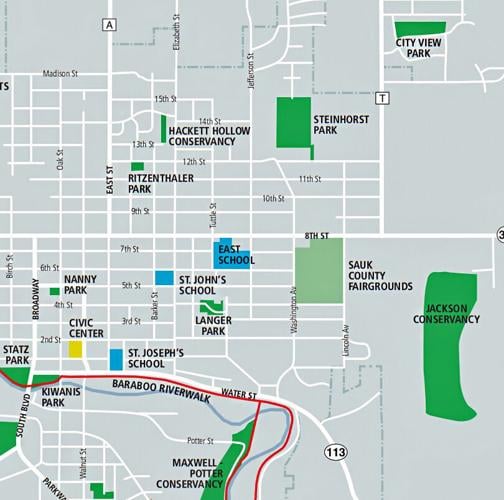


A map outlining the parks within the city of Baraboo shows where the planned 52-acre conservancy on the eastern edge of the city will be. The Baraboo Parks Commission has proposed naming the conservancy after a former chief of the Ho-Chunk Nation who resided there in the 18th and 19th centuries.
People are also reading…

Hardy

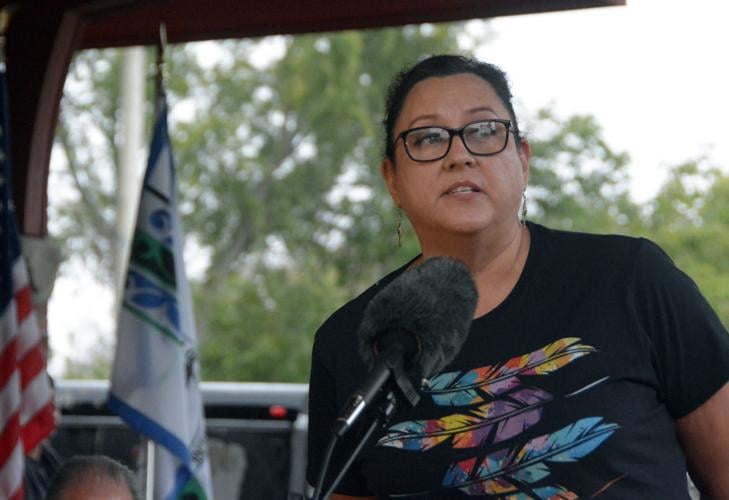
Kristin White Eagle, Ho-Chunk legislator and former Sauk County supervisor, speaks to a group of Indigenous Peoples' Day of Sauk County attendees in October at the Reedsburg Area Chamber of Commerce. White Eagle helped facilitate the potential name of the newest park in Baraboo after Chief Naaga Keramani, who lived in that area in the 18th and 19th centuries.
GALLERY: Indigenous Students United add to informational site along Baraboo Riverwalk
Indigenous Students United

Jordana WhiteEagle, 16, plants corn, beans and squash Wednesday morning along the Baraboo Riverwalk near Circus World Museum. She and four other members of Baraboo High School’s Indigenous Students United participated in the planting organized by the Sauk County Historical Society to further beautify and commemorate Native American history in the area, adding to a bench and two informational plaques the society installed last year for Indigenous Peoples’ Day. SCHS Executive Director Paul Wolter said this is “literally the first time Ho-Chunk have planted corn in this area for 180 years.” A Ho-Chunk village was located nearby, in what is now part of the city of Baraboo, through the 1830s, he said. Native residents were later forced off the land by white settlers, according to the SCHS and the Ho-Chunk Nation. Indigenous Students United has about 20 members at BHS, said advisor Sarah Roth. In addition to teaching the public about native plants and history, she said, “I hope that my students see that the community really values their culture and their heritage and that they really take pride in their history in the area.”
Seneca Funmaker

Seneca Funmaker, 17, shows off her dirty hands after planting corn, beans and squash Wednesday morning along Water Street at the northeast corner of Circus World Museum’s parking lot. She and four other members of Baraboo High School’s Indigenous Students United participated in the planting organized by the Sauk County Historical Society to further beautify and commemorate Native American history at the site, adding to a bench and two informational plaques the society installed last year for Indigenous Peoples’ Day. SCHS Executive Director Paul Wolter said this is “literally the first time Ho-Chunk have planted corn in this area for 180 years.” A Ho-Chunk village was located nearby, in what is now part of the city of Baraboo, through the 1830s, he said. Native residents were later forced off the land by white settlers, according to the SCHS and the Ho-Chunk Nation. Indigenous Students United has about 20 members at BHS, said advisor Sarah Roth. In addition to teaching the public about native plants and history, she said, “I hope that my students see that the community really values their culture and their heritage and that they really take pride in their history in the area.”
Indigenous Students United

Funmaker siblings Seneca, left, 17, Nelson, 16, and Vincent, right, 15, laugh with Jordana WhiteEagle, 16, after planting corn, beans and squash Wednesday morning along the Baraboo Riverwalk near Circus World Museum. They and another member of Baraboo High School’s Indigenous Students United club participated in the planting organized by the Sauk County Historical Society to further beautify and commemorate Native American history in the area, adding to a bench and two informational plaques the society installed last year for Indigenous Peoples’ Day. Nelson Funmaker said he’s looking forward to seeing the plants this fall after they’ve had time to grow and thinks the event could become a tradition for Native American students in Baraboo schools. “I think it’s pretty important, because this is part of our culture,” he said. SCHS Executive Director Paul Wolter said this is “literally the first time Ho-Chunk have planted corn in this area for 180 years.” A Ho-Chunk village was located nearby, in what is now part of the city of Baraboo, through the 1830s, he said. Native residents were later forced off the land by white settlers, according to the SCHS and the Ho-Chunk Nation. Indigenous Students United has about 20 members at BHS, said advisor Sarah Roth. In addition to teaching the public about native plants and history, she said, “I hope that my students see that the community really values their culture and their heritage and that they really take pride in their history in the area.”
Indigenous Students United

Indigenous Students United
Indigenous Students United

Members of Baraboo High School’s Indigenous Students United club, from left, Vincent Funmaker, 15, Jordana WhiteEagle, 16, and Giselle Decorah, 16, plant corn, beans and squash with help from the Sauk County Historical Society Wednesday morning along Water Street at the northeast corner of Circus World Museum’s parking lot. The event was part of a continuing effort to beautify and commemorate Native American history in the area, adding to a bench and two informational plaques the society installed last year for Indigenous Peoples’ Day. SCHS Executive Director Paul Wolter said this is “literally the first time Ho-Chunk have planted corn in this area for 180 years.” A Ho-Chunk village was located nearby, in what is now part of the city of Baraboo, through the 1830s, he said. Native residents were later forced off the land by white settlers, according to the SCHS and the Ho-Chunk Nation. Indigenous Students United has about 20 members at BHS, said advisor Sarah Roth. In addition to teaching the public about native plants and history, she said, “I hope that my students see that the community really values their culture and their heritage and that they really take pride in their history in the area.”
Indigenous Students United

Baraboo High School students, all members of Indigenous Students United, plant corn, beans and squash with help from Paul Wolter, left, executive director of the Sauk County Historical Society, Wednesday morning along Water Street at the northeast corner of Circus World Museum’s parking lot. The event was part of a continuing effort to beautify and commemorate Native American history in the area, adding to a bench and two informational plaques the society installed last year for Indigenous Peoples’ Day. SCHS Executive Director Paul Wolter said this is “literally the first time Ho-Chunk have planted corn in this area for 180 years.” A Ho-Chunk village was located nearby, in what is now part of the city of Baraboo, through the 1830s, he said. Native residents were later forced off the land by white settlers, according to the SCHS and the Ho-Chunk Nation. Indigenous Students United has about 20 members at BHS, said advisor Sarah Roth. In addition to teaching the public about native plants and history, she said, “I hope that my students see that the community really values their culture and their heritage and that they really take pride in their history in the area.”
Indigenous Students United

Indigenous Students United
Giselle Decorah and Paul Wolter

Giselle Decorah and Paul Wolter
Indigenous Students United

Indigenous Students United
Indigenous Students United

Members of Baraboo High School’s Indigenous Students United club, from left, Seneca, 17, and Nelson Funmaker, 16, Jordana WhiteEagle, 16, and Vincent Funmaker, 15, read an interpretative sign Wednesday morning about the history of Ho-Chunk villages on the Baraboo River near Circus World Museum. They had just finished planting corn, beans and squash with members of the Sauk County Historical Society to further beautify and commemorate Native American history in the area, adding to a bench and two informational plaques the society installed last year for Indigenous Peoples’ Day. Nelson Funmaker said he’s looking forward to seeing the plants this fall after they’ve had time to grow and thinks the event could become a tradition for Native American students in Baraboo schools. “I think it’s pretty important, because this is part of our culture,” he said. SCHS Executive Director Paul Wolter said this is “literally the first time Ho-Chunk have planted corn in this area for 180 years.” A Ho-Chunk village was located nearby, in what is now part of the city of Baraboo, through the 1830s, he said. Native residents were later forced off the land by white settlers, according to the SCHS and the Ho-Chunk Nation. Indigenous Students United has about 20 members at BHS, said advisor Sarah Roth. In addition to teaching the public about native plants and history, she said, “I hope that my students see that the community really values their culture and their heritage and that they really take pride in their history in the area.”
Ho-Chunk villages sign along Baraboo Riverwalk

Nelson Funmaker

Baraboo High School student Nelson Funmaker, 16, reads an interpretative sign Wednesday morning about the history of Ho-Chunk villages on the Baraboo River at the northeast corner of Circus World Museum’s parking lot on Water Street.
Indigenous Students United

Indigenous Students United
Seneca Funmaker and Jordana WhiteEagle

Seneca Funmaker and Jordana WhiteEagle
Giselle Decorah and Paul Wolter

Giselle Decorah and Paul Wolter
Mounds of the Baraboo Valley sign along Baraboo Riverwalk

Giselle Decorah

Giselle Decorah
Indigenous Students United

Indigenous Students United